
Watershed Restoration
The Grays Harbor Conservation District Watershed Restoration Program partners with the local community to restore and improve the watershed processes that support Grays Harbor County's abundant natural resources. From the headwaters of our rivers and creeks all the way down to Grays Harbor, our staff works on collaborative projects and programs that involve: native tree/shrub planting, invasive plant treatment, fish habitat enhancement, floodplain reconnection, water quality/quantity improvement and the reduction of extreme bank erosion using bioengineering techniques. We work with community members and landowners throughout the county to assess river and stream conditions and develop plans for restoration/enhancement. Our staff also pursues grant funding for implementation of watershed restoration activities tailored to each landowner's particular needs and situation.

Reach-Scale Restoration
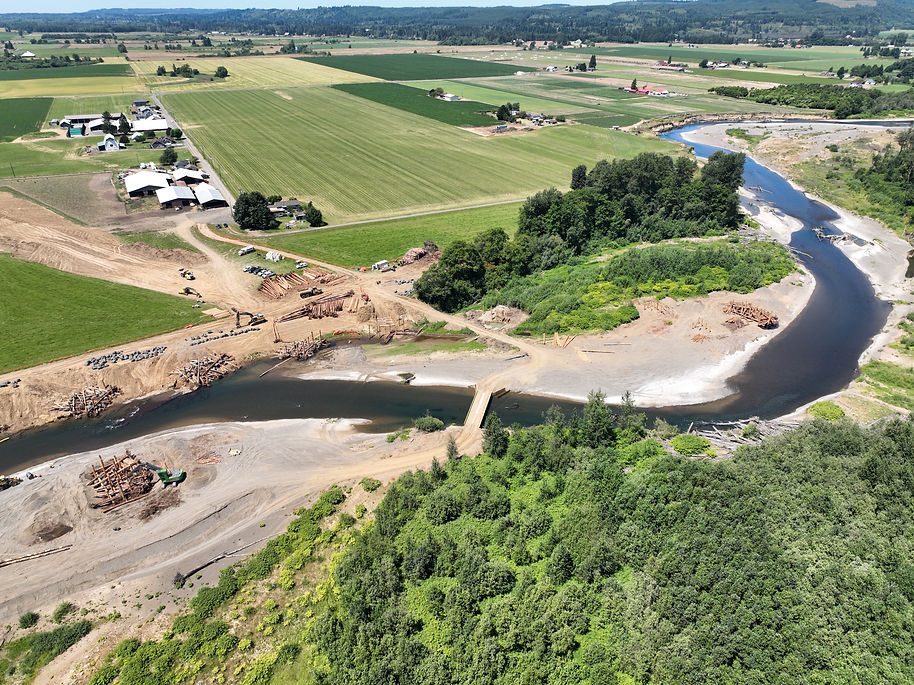
We work closely with local landowners to design and implement reach-scale watershed restoration projects that improve habitat complexity for salmon, reduce extreme erosion rates, improve floodplain connectivity, and improve water quality/quantity.
Since 2018 GHCD has facilitated reach-scale restoration along 20 miles of rivers and streams in Grays Harbor County

Riparian Plantings
Connecting with landowners to plant native riparian trees and shrubs to improve habitat for fish and wildlife and reduce erosion along our rivers and streams.
Since 2018 GHCD has planted 265,900 native trees and shrubs and implemented riparian restoration across 1,685 floodplain acres

Invasive Species Removal
We offer our expertise to landowners in developing plans and seeking funding to address invasive plants that impact riparian and aquatic resources. We mainly focus on invasive blackberry, knotweed, reed canary grass, english ivy, and scotch broom.

Watershed Restoration Planning
The District collaborates with local community members, natural resources stakeholder groups, the Confederated Tribes of the Chehalis Reservation, the Quinault Indian Nation, and local/state governments and agencies to develop comprehensive assessments and plans that aim to improve watershed health for people and wildlife.


